A palate expander widens the upper jaw by gradually separating the midpalatal suture, the growth seam running down the roof of the mouth. Orthodontists use it to correct crossbites, relieve crowding, and open space for teeth that are blocked from coming in. Most children wear one for four to six months.
If your child just got fitted for one, or Dr. Johnson has recommended it, you probably have questions about what the next few months actually look like. Here is the honest version, from the first night through the day it comes out.
What a Palate Expander Actually Does
The upper jaw does not start out as one solid bone. It grows as two halves joined by a seam called the midpalatal suture, and that seam stays flexible through childhood. A palate expander takes advantage of that flexibility. It applies steady outward pressure so the two halves separate slightly, and new bone fills the space between them.
That is the part people miss. An expander is not moving teeth. It is widening bone. Teeth move as a result, but the appliance is doing skeletal work, which is why the timing matters so much.
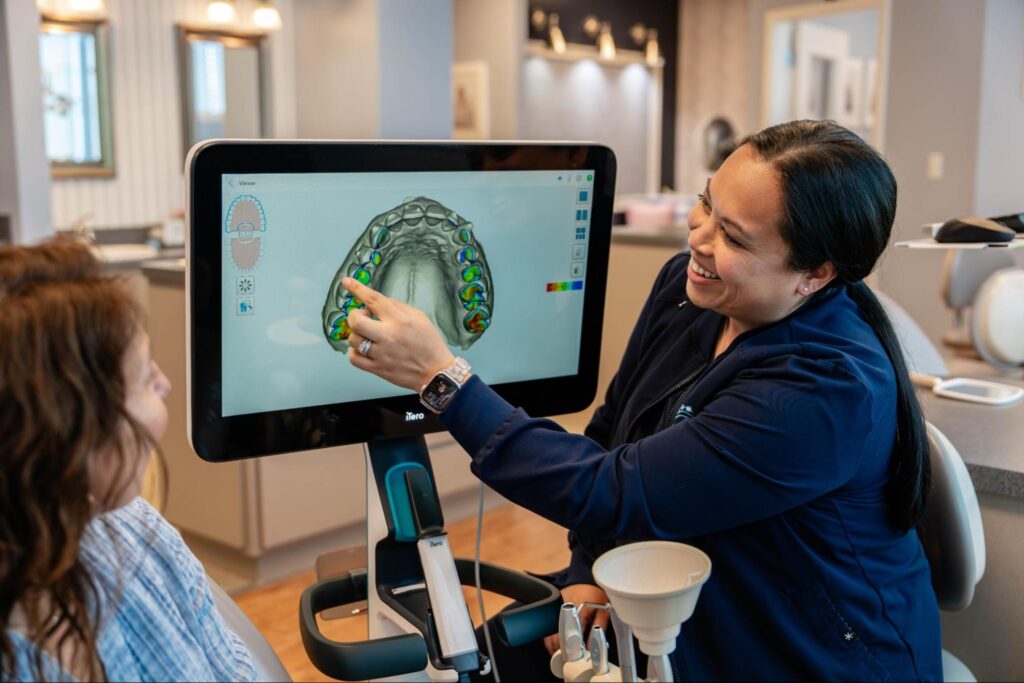
Dr. Johnson takes a digital scan of the upper jaw and teeth, and the scan goes to a lab that builds a custom appliance from high-grade metal. It is cemented to the back molars, usually without any numbing, and the whole placement appointment is short.
Why Age Seven to Fifteen Is the Window
The midpalatal suture fuses somewhere between ages fourteen and sixteen for most people. Before it fuses, expansion is straightforward. After it fuses, widening the jaw takes surgical assistance or appliances anchored directly into bone.
This is one of the clearest reasons the American Association of Orthodontists recommends a first orthodontic evaluation by age seven. A narrow palate is easy to spot at seven and easy to correct at nine. At sixteen it becomes a much bigger conversation. Our approach to orthodontic care built around growing mouths starts with catching things in that window.
The Different Types of Palate Expanders
Fixed or Rapid Palate Expander (RPE)
The most common type. Metal bands wrap around the back molars and connect to a central screw sitting high against the roof of the mouth. You turn the screw with a small key on a schedule Dr. Johnson sets. It stays in the mouth the entire time.
Bonded Expander
Similar mechanics, but instead of bands around individual teeth, a plastic covering is bonded over the back teeth. Sometimes the better choice depending on which teeth have erupted and how the bite sits.
Removable Expander
For smaller corrections. It looks a little like a clear aligner tray with a screw in the middle, and it comes out for cleaning. It still needs to be worn close to full time, and the turning schedule is usually less frequent than a fixed appliance.
The First Week, Day by Day
This is the part almost nobody explains, and it is the part parents actually worry about.
Day One
Pressure, not pain. Most kids describe it as a firm push behind the nose and across the cheekbones rather than a toothache. It fades within the hour. Soft foods for dinner make the evening easier.
Days Two and Three
Speech changes. The tongue now rests against metal instead of the palate, so S and T sounds come out differently. Expect a lisp. Expect your child to be self conscious about it. Reading out loud for ten minutes a day speeds up the adjustment more than anything else.
Extra saliva is normal too. The mouth reads the appliance as something foreign and produces more saliva in response. You may hear slurping at the dinner table. It settles down.
Days Four Through Seven
Eating gets easier. Food does get caught around the appliance, so rinsing with water after meals becomes part of the routine. By the end of the first week most kids stop noticing it entirely.
If real pain shows up rather than pressure, or if something feels loose, call us. That is not part of the normal adjustment.
Turning the Expander
Dr. Johnson gives you a key and a schedule. The schedule is specific to your child’s case, so follow the one you were given rather than anything you read online.
A few things that make it go smoothly:
- Turn at bedtime. The pressure is most noticeable in the first fifteen minutes or so. Doing it before sleep means your child mostly misses that window.
- Good light and a steady head. Have your child lie back with their head in your lap. It is far easier than trying to do it standing at a mirror.
- Push until the next hole comes into view. A partial turn can let the screw slip back. You want to see the next hole clearly before you remove the key.
What If You Miss a Turn
Nothing bad happens. Just do the next scheduled turn as normal.
Do not double up to catch up. Two turns at once puts more force on the suture and the teeth than the appliance is designed to deliver, and it can cause real soreness without speeding anything up. If you have missed several in a row, call the office rather than improvising.
About That Gap Between the Front Teeth
Somewhere in the first few weeks, a space opens between the two upper front teeth. Parents call us about this more than anything else on this list.
It is the single best sign the appliance is doing its job. The gap appears because the two halves of the palate are separating, and the front teeth sit right on the seam. Seeing it means the suture opened.
Once you stop turning, the gap closes on its own. Elastic fibers in the gum tissue pull the teeth back together over the following weeks. In some cases braces later on will fine tune the position, but the closing itself happens without any help.
Expanders and Breathing
A narrow upper jaw sits directly beneath the nasal floor, so a narrow palate often comes with a narrow nasal airway. Kids in this group tend to breathe through the mouth, especially at night, and mouth breathing is associated with snoring and disrupted sleep.
Widening the upper jaw can open up nasal airway volume as a side effect of the skeletal change. It is not a treatment for sleep apnea and we would never present it as one, but if your child snores, breathes through their mouth, or wakes up tired, it is worth mentioning at the consultation. It changes how we look at the whole picture.
Timeline: How Long the Whole Thing Takes
Two distinct phases, and people often confuse them.
The active phase is the turning. Usually a few weeks, depending on how much width is needed.
The retention phase is the long part. The appliance stays in the mouth for several months after the last turn, doing nothing except holding the new position while bone fills the gap in the suture. Taking it out early is how expansion relapses, so this phase is not optional even though it feels like nothing is happening.
Dr. Johnson will give you specific numbers for your child’s case after the exam and imaging.
When an Expander Is Not the Answer
Not every narrow smile needs one. Depending on what the exam and 3D imaging show, Dr. Johnson may recommend traditional braces on their own, removal of crowded or impacted teeth, or in adult cases with a fused suture, a surgical approach.
Expansion is also frequently phase one of a two phase plan. The expander creates room, then braces or aligners finish the alignment once the permanent teeth are in. What happens at your first appointment covers how we map that out.
Frequently Asked Questions
Does a palate expander hurt?
Most children describe pressure rather than pain, concentrated in the first ten to fifteen minutes after a turn and spreading across the roof of the mouth and up toward the nose. It fades quickly. Soft foods and turning at bedtime handle most of the discomfort. Sharp or persistent pain is not normal, so call us if that happens.
How long does a palate expander stay in?
The turning phase usually runs a few weeks. After that the appliance stays in for several more months while new bone forms in the widened suture and stabilizes the result. Removing it before that bone has formed allows the jaw to narrow again, which is why the quiet second half of treatment matters as much as the first.
What should I do if we miss a turn?
Resume the normal schedule at the next turn. Do not do two turns to make up for it. Doubling up applies more force than the appliance is designed for and can cause soreness without shortening treatment. If you have missed several turns in a row, call the office before continuing.
Why is there a gap between my child’s front teeth?
The gap means the appliance is working. The two halves of the upper jaw are separating and the front teeth sit directly on that seam, so a space opens between them. Once turning stops, elastic fibers in the surrounding gum tissue pull the teeth back together and the gap closes on its own.
Can adults get a palate expander?
The midpalatal suture usually fuses between ages fourteen and sixteen. After that, a conventional expander cannot separate it. Adults who need jaw widening are typically looking at appliances anchored directly into bone or a surgically assisted approach. Dr. Johnson can tell you which applies after an exam.
Talk to Dr. Johnson About Your Child’s Smile
If your child has crowded teeth, a crossbite, or a narrow upper jaw, an evaluation now is far easier than the same conversation in six years. Johnson Orthodontics treats children, teens, and adults across Rehoboth Beach, families throughout Lewes, and the surrounding Sussex County area.
Book a free consultation or get in touch with our team to ask a question first. There is more in our answers to the questions patients ask most.
For independent patient education, the American Association of Orthodontists publishes a guide to palatal expanders and the conditions they treat.